
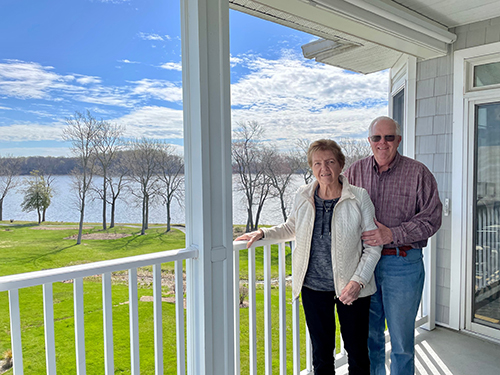
What It Really Means to Live in a 55+ Community in Maryland
Who can buy a home in a 55+ community, and who is allowed to live there? It sounds like a simple question, but the answer is often more nuanced than people expect. Do all owners need to be 55 or older? Can a younger spouse live there? What about adult children, grandchildren, or future caregivers? These are some of the most common questions I hear, and the answers depend on the specific community and its rules.
What Is a 55+ Community?
A 55+ community, also called an age restricted community, is a neighborhood designed for older adults. These communities are legally permitted to restrict residency based on age under federal fair housing laws.
In most cases, at least 80 percent of the occupied homes in the community must have one resident who is 55 years of age or older. This is what allows the community to maintain its age restricted status.
You will find many of these communities throughout Harford County, including in Bel Air, Joppa, Abingdon, and surrounding areas. They range from condos and villas to single family homes.
Who Can Buy a Home in a 55+ Community in Maryland?
This is one of the most common questions I hear.
In many 55+ communities, a buyer does not have to be 55 years old to purchase the home. Ownership and occupancy are two separate things. It is possible for someone under 55 to buy the property, but there are restrictions on who can live there.
That said, each community has its own governing documents. Some are stricter than others. Certain communities require at least one owner to be 55 or older, while others focus only on who occupies the home. This is why it is so important to review the specific rules before making an offer.
Who Can Live in a 55+ Community?
In most cases, at least one permanent resident must be 55 years of age or older. That person usually needs to live in the home full time.
A spouse or partner under 55 is often allowed to live in the home with the 55+ resident. This is very common and generally permitted, but again, it depends on the community rules.
The bigger restrictions tend to apply to children, grandchildren, or long term guests. Many 55+ communities limit how long minors can stay in the home. Short visits are usually fine, but full time residency is typically not allowed.
This came up repeatedly at my open house in Joppa. Buyers wanted to know if adult children could move in later, or if grandchildren could stay for extended periods. The answer is that it depends on the HOA, and those details matter.
Can a 55+ Home Be Used as a Rental?
Another frequent question is whether these homes can be rented out.
Some 55+ communities allow rentals with restrictions. Others prohibit rentals entirely or require a minimum ownership period before renting is allowed. Even when rentals are permitted, the tenant must still meet the age requirements.
If you are buying with the idea of renting the home in the future, this is something that needs to be confirmed upfront.
Why These Rules Exist
Age restricted communities are designed to support a certain lifestyle. Many residents are looking for quieter neighborhoods, lower maintenance homes, and amenities that cater to their stage of life.
The rules are not meant to be exclusionary. They are meant to preserve the purpose of the community and comply with federal housing regulations.
Understanding this upfront helps buyers decide if a 55+ community truly fits their long term plans.
Common Misconceptions About 55+ Communities
One misconception is that everyone in the neighborhood is retired. That is not always the case. Many residents are still working, traveling, and very active.
Another misconception is that these communities feel institutional. In reality, many feel just like traditional neighborhoods, with sidewalks, green space, and social opportunities.
The biggest misconception is that the rules are the same everywhere. They are not. Each community sets its own guidelines within the legal framework.
What Buyers Should Do Before Making an Offer
If you are considering a 55+ community in Maryland, here are a few practical steps.
First, think about your long term plans. Consider who may need to live with you now or in the future.
Second, review the HOA documents carefully. Pay close attention to age requirements, guest policies, and rental rules.
Third, work with a local Realtor who has experience in these communities. I spend a lot of time answering these questions because they matter.
Final Thoughts
Living in a 55+ community in Maryland can be a wonderful option, but it is not one size fits all. The eligibility rules are a key part of the decision making process.
After hosting my recent open house in Joppa, it was clear that buyers want clarity, not assumptions. Asking the right questions early can save a lot of stress later.
If you are curious about 55+ communities in Bel Air, Joppa, or anywhere in Harford County, I am always happy to talk through the details and help you decide if it is the right fit for you.
Follow Leigh on Facebook Leigh Kaminsky, Bel Air, MD Realtor